Both the "bob" and the "rock" can be used in many different applications. In this video I show you how you can use them for setting up low body punches or to use a s defense against an attack and thereby countering with the low punches. There are many other punches, kick and takedowns that can be set up using them, largely up to your own imagination. I will give some of these examples in the upcoming videos.

Showing posts with label boxing. Show all posts
Showing posts with label boxing. Show all posts
Tuesday, April 10, 2012

Saturday, March 31, 2012
Boxing, Kickboxing, MMA, defence - "The Bob"

The next type of head movement that we will look at is the bob. We have a couple different ways of avoiding straight punches but the hooks, overhand and big power right cross can be avoided by circling your head under the punch. The three elements to doing a proper bob are:
1. First, move the head away from the punch.
2. Drop with the knees and circle under the punch.
3. Come back up tucked and plant the foot for the counter punch or kick.
Saturday, March 24, 2012
Boxing and Kickboxing for MMA - Slipping punches
Of all the different types of head movement slipping is the fastest and works very well to avoid straight, fast punches. It also aids in adding momentum to your lateral movements Slipping left and right will not help if your opponent is throwing looping punches like hooks or over hands and also they are no good for countering with power because you don't build up any torque. They are, however, fundamental to the jab game and keeping the head moving as you change angles.
The elements to the slip are:
1. "Slip with the hip" shoot your hip out to the left to move you head right and vice-versa.
2. When countering allow your opponent to come to you by a slight pause, then slip and counter. 3. Stay forward of your hips with your head.
The elements to the slip are:
1. "Slip with the hip" shoot your hip out to the left to move you head right and vice-versa.
2. When countering allow your opponent to come to you by a slight pause, then slip and counter. 3. Stay forward of your hips with your head.
Thursday, January 19, 2012
How To Throw A Boxing / Kiockboxing Right Cross
We continue with the primer on the basic punches. Today we talk about the #2 punch or "Right Cross".
This punch is statistically the best knock out technique because of the leverage, reach and accuracy. You could probably get more raw torque with a hook or over hand but if your opponent's hands are up you will most likely hit an arm or glove wear as, the two punch lines straight and is designed to connect to the button.
The main points for throwing a good right hand are:
1. Push and turn off the back foot until the leg is straight and the heel is pointing outward.
2. Translate that turn through the entire body until the right shoulder is pointed at your opponent's chin, the left shoulder is completely turned the other way.
3. At the last second, the hand leaves the face, pushing straight from the cheek to connect to the opponent's chin. The right shoulder replaces the hand to protect the chin.
4. Get the hand back to the face as quick as possible.
Monday, January 16, 2012
"The Magic Pill" short story
With the smell of incense and stale gym bags, another brutal training session ends with the familiar gruff Asian voice saying "Ok, let's have a seat and talk about yack about." The hard, worn out, blood red industrial carpet not the most comfortable seat but still a welcome break from the grind as we sat cross-legged on the floor. The Richmond Kung Fu and Muay Thai school was packed with about 40 guys and girls with boxing gloves slung over the necks, shirts and shorts, soaked in sweat. Sifu Hon Lee, cousin of Bruce Lee and generally bad-ass old Chinese man, occasionally had these sessions where we would talk about "street smarts" - his version of self defense. He would often encourage people to chime in with their questions and that there were NO stupid questions. (Picture a rated "R" version of Mr. Miyagi.)
During the discussion, a student who was pretty new to the class asks a question that earned gasps and muffled snickers from the veteran students. I'll skip the question but here is the reply that all the older students knew was coming next:
"Ok, I tell you what, go down to London Drugs and walk all the way to the right side of the store. Go strait to the back and on the second shelf, right beside the vitamin C you will find a special vitamin call 'How to stop a guy try to choke me'." Of course, the whole class starts to laugh at the kids stupid question and Hon continues. "You see, my point is that you don't even know how to do a jab and you want me to tell you how to defend against somebody choking you?! It doesn't make sense!"
The moral of this tale is:
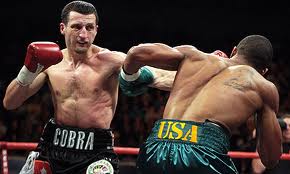
You must put in the time with the basics! Being tight with your basic BJJ positions and having strong take downs and take down defense are a must! The stuff I talk about being on autopilot, footwork, head movement and jab have to be mastered before moving on. I see fighters who have quite a few fights under their belts and are still shaky on these things. When you get to a higher level of fight competition, you better believe that they will have their shit together with these basics! So before you move on, thinking that you are the protege everyone has been waiting for, drill the crap out of your basics. Keep those hands up - you aint no Carl Froch or Roy Jones jr. yet and you aint that fast!
Stay tuned for some upcoming video on basics and drills to build skills!
Tuesday, January 10, 2012
Head Movement Part #1
In the last few years, as MMA continues to evolve, we see more and more use of boxing technique in the cage. The obvious would be the punches and combinations but we are also starting to see some good footwork and head movement. At Carlson Gracie MMA in Maple Ridge we study boxing and Muay Thai / kickboxing separately, put it together, then blend it with our wrestling to get the best positioning for take downs and defense. A large part of boxing is in the defense which includes head movement and foot work. These basics should be in what I call "Auto-pilot". The way we train our fighters is to have these things along with the jab working constantly to keep the opponent busy while we strategize and look for openings and weaknesses from the corner. I expect my fighters to be busy from the start with non-stop movement, so I can concentrate on calling out punches, kicks, combinations or shots. I don't want to be telling them to do these basic things. A fighter should never be standing in front of his or her opponent waiting, unless it is part of a strategy to suck them into a counter.
The three components of "Auto-pilot" are :
1. Footwork
2. Head movement
3. Jab
If a fighter does not have these 3 things absolutely mastered, they are not ready for the ring.
For this series of posts I will concentrate on head movement and it's key components and uses.
Head movement does 3 important things.
1. Defense - It makes you a moving target; Add head movement to your combination and any time you are not punching or kicking you should be moving your head or moving your body.
2. Adds power to your punch or kick by hiding your windup in your defense.
3. Adds momentum to your lateral movement.
4. Can be used as a set up or fake by making him flinch.
(We don't fake with punches, either throw em or don't!)
Check out Couture vs. Sylvia to see a great wrestler who learned how to employ the use of head movement to get past a larger opponents long reach.
Monday, October 19, 2009
Wrestling 101 - Cutting Wieght
 A lot of people are concerned about there weight, but probably none more so than fighters. As fighters we are under a lot of pressure to be bigger, stronger, and faster than our opponents. We cut weight to be at the top of the weight class. The more you cut the bigger and stronger you will be, theoretically. If done wrong though, all that size and strength won't help you if you're not at 100% on the day of competition. We are going to look at some ways to make the cut easier as well as how to stay at 100% for fight day.
Let me first make something really clear, cutting weight is not the same as losing weight. You are simply removing the water from you're system to help drop a couple of pounds. As soon as you reingest water you put the weight right back on. As I cover the weight cutting process remember that these are the tips that work for me, some people drop the water easy while others have a hard time with it.
The water cutting process generally starts a week out from when you have to weigh in. During that time I will increase my water intake to about 4 - 6 litres of water a day, more if I'm working out hard. Now what this does is trick my body. Most people are dehydrated in their day to day lives. Their bodies retain water out of fear that more water isn't coming for a while. By drinking extra water, or what I like to call super hydrating, our body is forced to get rid of the water instead of retaining it to make room for the more that is coming. Another thing you need to do is cut out salt as it makes you retain water, therefore making it harder to lose it. We keep this up for the whole week.
The night before weigh in I take my last drink of water as well as my last meal. The day of the weigh in is when I start the hard work. Basically you need to sweat. Simple. By super hydrating the week leading up to our bodies will give up the water easy, but we don't replace it. Our bodies won't have enough time to readjust to retaining water therefore it will be easier to dehydrate ourselves and drop more weight. Some people like to give themselves two days to cut weight if they have a lot to lose. Say you had to drop 12 pounds to make your weight class, you could cut 7 pounds the first day and drink back 1 pound of water throughout the day and the next day you drop 6 more, effectively dropping 12 pounds. If you do this make sure to eat dry foods throughout the first day, no fruits, vegetables or anything else with lots of water in it. For any serious weight cutting I recommend picking up a sauna suit.

Now that the weight is dropped many people think they are done, but the most important part to being 100% is how you replenish. Make sure you gradually introduce the water back to your system. Pedialyte is a really good drink to replenish with as it has electrolytes and other stuff you lost during the sweating period. If you drink to quick you will cramp up and feel really bad. By this point you're probably thinking with your stomach instead of your head, but we have to make sure we eat properly at this point. That means go back to your routine leading up to this weigh in. Don't go get greasy nachos right after weigh in as this will be a shock to your system and not make you feel very good. The other really important thing is a good nights rest as you body needs to recover.
Now remember that this is just to cut water weight. To control your weight you need to eat properly. As far how much you should cut, that all depends on you. If you've never cut weight before then I recommend a practice cut to learn what is feasible for you. Now as the tournament is this weekend here is a highlight of Genki Sudo, one of the best/most entertaining grapplers and MMA fighters ever.
Sunday, October 18, 2009
Functionality Part 2


In the gym we see people banging away on some machine or grunting under the weight of a barbell, each person envisioning the body part or muscle growing or shrinking. We often treat our bodies like a bunch of individual parts, molding and shaping, making them stronger and longer. Imagine a car with a 1000 horsepower motor and skinny little tires, you hit the gas and burn all the rubber off without making it to the finish line!
Look at a complete athlete like George St.Pierre; he is not obsessed with having huge biceps or massive pecs, rather, he trains his body as a cohesive unit.
If you haven't heard of "core" training you probably live in a cave, in which case you most likely are not reading this blog post. Core training is much more important than building big muscles when it comes to fighting or any sport for that matter. Throwing a powerful punch, turning out of a rear-naked choke, upa bridging or kneeing to the face all require a powerful core.
Try thinking of your body as a torso first with no arms or legs,then break your body down to 3 major areas. A) the shoulder girdle, consisting of the humerus, scapula and the clavicle. B) the core which consists of your abdominal, torso and back muscles. C) the pelvic and hip stabilizers. Without strength in these areas you would have no need for legs or arms!
Here are some good exercises for strengthening the shoulder, hip and core stabilizers.
1) Forward and back lunges: hold dumbell in each hand at your side, step forward and dip knee an inch or so from the floor then step the same leg back and perform the opposite movement.
2) Side to side "sit outs": From the push up position kick one leg out to the side and drop your hip to the floor, then repeat the movement on the other side. Switch back and forth fast to add some cardio to the exercise.
3) Perform a set of leg raises then flip over and do 10 sprawls. Repeat this for 5 or more sets then do 2 minutes or more of planks, front and side.
4) Try some Yoga "cobra" or sometimes called the "Hindu" push ups. these are done by going from downward dog, skimming the ground in a scooping motion to upward dog and scooping back to down dog. Try doing 10 of these if you think you have strong shoulders!
5) Lie on your stomach and, keeping you abs tight, lift one leg and the opposite side arm. Alternate and do 10 reps per side then lift both arms and legs at the same time for 10 to 20 reps.
These are a good start but I recommend that you incorporate a more comprehensive regimen in your daily routine.
I recommend the book you can find in my blog Amazon store; Core Performance Essentials by Mark Verstegen as a very good guide and there is a full workout plan that will give you a great base to improve your
performance.
Now think of your car with 1000 horsepower and traction bars and 30 inch meats in the rear! Now yer gonna get somewhere!!
P.S. here are some vids that might help:
Saturday, August 22, 2009
Boxing / Kickbxing tip #3
Build a strong foundation, build a strong house!
At Raptor we drill the shit out of footwork and it pays off in abundance with the way that we fight. Think about it this way, if you are always one or more steps ahead of your opponent he/she will be too busy looking for you to implement strategy. The first drills we work with new students are ladder-type drills that are as exciting as licking tissue paper but, with good footwork built in to your combination you can establish your dominance in the ring right from the start of the fight.
Conversely, if your footwork is lacking, you will never get good distance on your opponent, which translates to not being able to hit him and not having proper position for your own defense.
We do what is called "lateral movements" which are made up of three components or elements that I insist are to be mastered before anyone even attempts to do any sparring, let alone fighting. The three elements are:
1. The footwork - forward, back, left, right.
2. head movement (rocking motion) - the rule and rhyme is "rock the way you walk".
3. The Jab - jab lands when the front foot lands.
The way I explain it to my students is that these three elements need to be on auto-pilot while you are in the ring, the coach should never have to yell at you to keep your hands up or move your feet or head.
We will be putting up some great videos soon that will show these drills and techniques in detail.
The first level of kickboxing (Private) at Raptor will give you a fantastic foundation weather you are a Boxer, kickboxer or M.M.A. fighter and we will try to cover all of these in the video series so keep following!
Coach Toby
Tuesday, August 11, 2009
Boxing / Kickboxing Tip #1

Hi, this will be the first tip in this series and there will be many more to come. I hope these are informative and help with your training.
One of the most important things that I or any other martial arts teacher can impart on students of all levels is, to KEEP YOUR HANDS UP!
Most fighters and fans have heard of the "Button", which is the area of the jaw that, when hit, seems to shut the fighters lights out. While may not be an actual button, it seems to be just as effective for the purpose of finishing a fight early. We see fighters such as Liddel and Wanderlei, two of the toughest s.o.b.s to enter the Octagon, drop that hand and the opponent capitalize with accuracy and timing and "BOOM OUT GO THE LIGHTS!. You hear folks talk about a "glass jaw" but in reality, anyone who gets hit with the correct leverage and the power that any trained fighter would posess is suseptible to this fate. In a self defense situation the same rule goes - we must always protect the pumpkin! I always say to my students that there are 2 ways that I never want them to lose a fight; 1. Never gas out for lack of training and 2. KEEP YOU HANDS UP!
And remember;
Stay loose, like Drunkin' Man Kung-Fu baby!
Coach Toby
Subscribe to:
Posts (Atom)